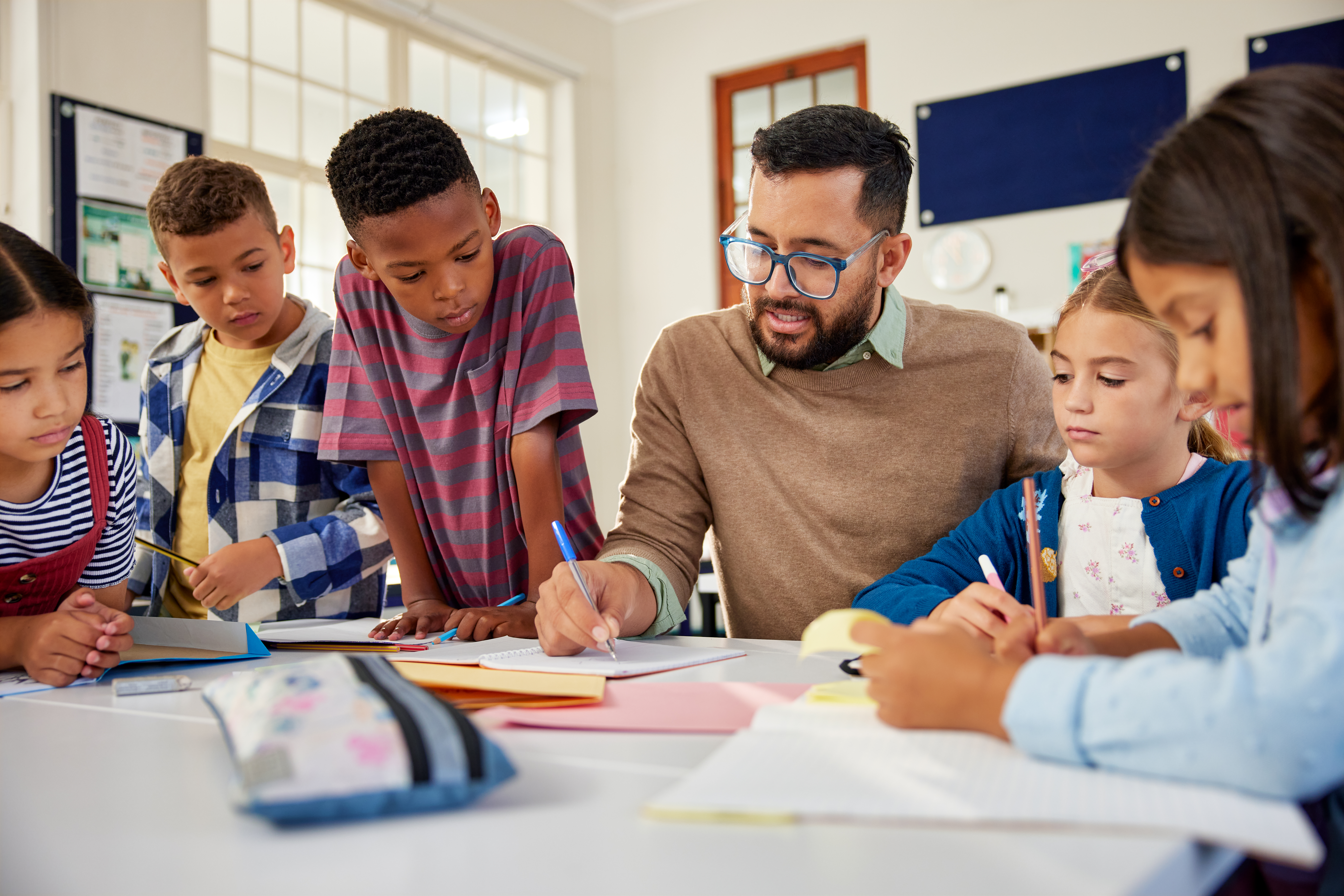
Young school teacher helping elementary students while writing in notebooks. Hispanic male teacher wearing spectacles and checking student notebooks after test while talking to them in classroom. Happy male teacher helping and checking works of pupil in classroom.
Empowering Educators: Top Strategies for Fostering Resilience and Confidence in Gifted Students
Gifted education is not just about feeding curiosity—it’s about nurturing hearts and minds. As an educator, you know that gifted students face unique challenges. They need more than academic guidance; they crave emotional support to build resilience and confidence. What if you could arm them with tools to face these challenges head-on? This guide offers practical strategies to help you do just that, empowering you to make a lasting impact. Ready to transform lives? Let’s embark on this journey together. For more insights, visit this resource.## Building Resilience in Gifted Students
Resilience is crucial for gifted students as they navigate both academic and emotional challenges. This section delves into practical techniques to bolster resilience, encouraging a proactive mindset in gifted students.
Emotional Support Techniques
Emotional support is essential in developing resilience among gifted students. Providing a safe and nurturing environment allows students to express their feelings without fear. Empathic listening is key; it involves understanding their emotions and validating their experiences.
Real-world example: A teacher noticed a gifted student struggling with perfectionism. By offering one-on-one sessions, the student felt heard and began to open up.
Create a safe space for students to share their thoughts.
Encourage open communication by asking open-ended questions.
Validate their feelings to help them feel understood.
For more insights on emotional support, visit this blog post.
Encouraging Positive Risk-Taking
Positive risk-taking helps gifted students step out of their comfort zones and embrace challenges. It is vital to frame risks as opportunities for growth and learning.
Teachers can encourage students by setting achievable challenges.
Highlight the value of learning from mistakes.
Use role models who have taken risks successfully.
Consider a student hesitant to participate in a science fair. By encouraging them to present a small project, they gradually gain confidence in tackling bigger challenges.
For strategies on positive risk-taking, explore this resource.
Developing Coping Strategies
Gifted students benefit from coping strategies to manage stress and anxiety. Teaching these techniques can empower students to handle setbacks effectively.
Introduce relaxation techniques like deep breathing and mindfulness.
Encourage journaling to help process emotions.
Teach time management skills to reduce overwhelm.
A case study highlighted how teaching mindfulness helped a student manage exam anxiety, leading to improved performance.
For additional strategies and resources, check out this article.
Confidence Building Approaches

Confidence is a crucial component of personal and academic success for gifted students. This section explores ways to nurture self-belief and a positive self-image.
Fostering a Growth Mindset
A growth mindset encourages students to view challenges as opportunities for growth. This perspective helps them embrace learning without fear of failure.
Teach students that intelligence can be developed through effort.
Praise effort and strategies rather than innate ability.
Encourage reflection on learning experiences.
Consider a teacher who regularly shares stories of famous individuals who overcame failures, instilling the belief that persistence leads to success.
For more on fostering a growth mindset, see this insightful article.
Celebrating Small Wins
Celebrating small wins can boost confidence significantly. Recognizing progress, no matter how minor, reinforces positive behavior and encourages continued effort.
Set small, achievable goals for students.
Celebrate successes with praise or rewards.
Encourage students to appreciate their own achievements.
In one classroom, a teacher used a “Success Wall” where students could post their achievements, fostering a culture of celebration and support.
Encouraging Self-Reflection
Self-reflection aids in building self-awareness and confidence. By reflecting on experiences, students gain insights into their strengths and areas for improvement.
Guide students to reflect on their successes and setbacks.
Use reflective journals as a tool for personal growth.
Encourage peer discussions to share insights.
A student who regularly reflected on their learning journey gained clarity on their goals and developed a stronger sense of self.
Educational Strategies for Success

Tailored educational strategies can enhance both the academic and emotional development of gifted students. This section covers approaches to personalize learning and create supportive classroom environments.
Personalized Learning Plans
Personalized learning plans address individual needs and capabilities, promoting engagement and motivation.
Assess students’ strengths and weaknesses.
Set specific, personalized goals.
Adjust teaching methods to suit different learning styles.
Educators who implemented personalized plans saw increased student motivation and participation.
Interactive Classroom Activities
Interactive activities engage students and make learning enjoyable. Hands-on experiences stimulate curiosity and enhance understanding.
Use project-based learning to explore complex topics.
Incorporate technology, such as educational apps and games.
Facilitate group activities to encourage collaboration.
A teacher introduced a coding project where students learned through creating their own games, resulting in heightened interest and understanding.
Collaboration and Peer Support
Collaboration fosters a sense of community and support among students. Peer interactions enhance learning and personal growth.
Organize group projects to encourage teamwork.
Set up peer mentoring programs.
Promote open dialogue and idea sharing.
A peer mentoring program boosted confidence among younger students, who benefited from the guidance of their older peers.
For comprehensive educational strategies, explore this resource.

A certified Heal Your Life® Coach with 20+ years in education and emotional development. Supports gifted teens in navigating anxiety, perfectionism, and identity challenges, while equipping parents with practical tools for lasting transformation. Sessions blend emotional healing, mindset mastery, and strategic empowerment.