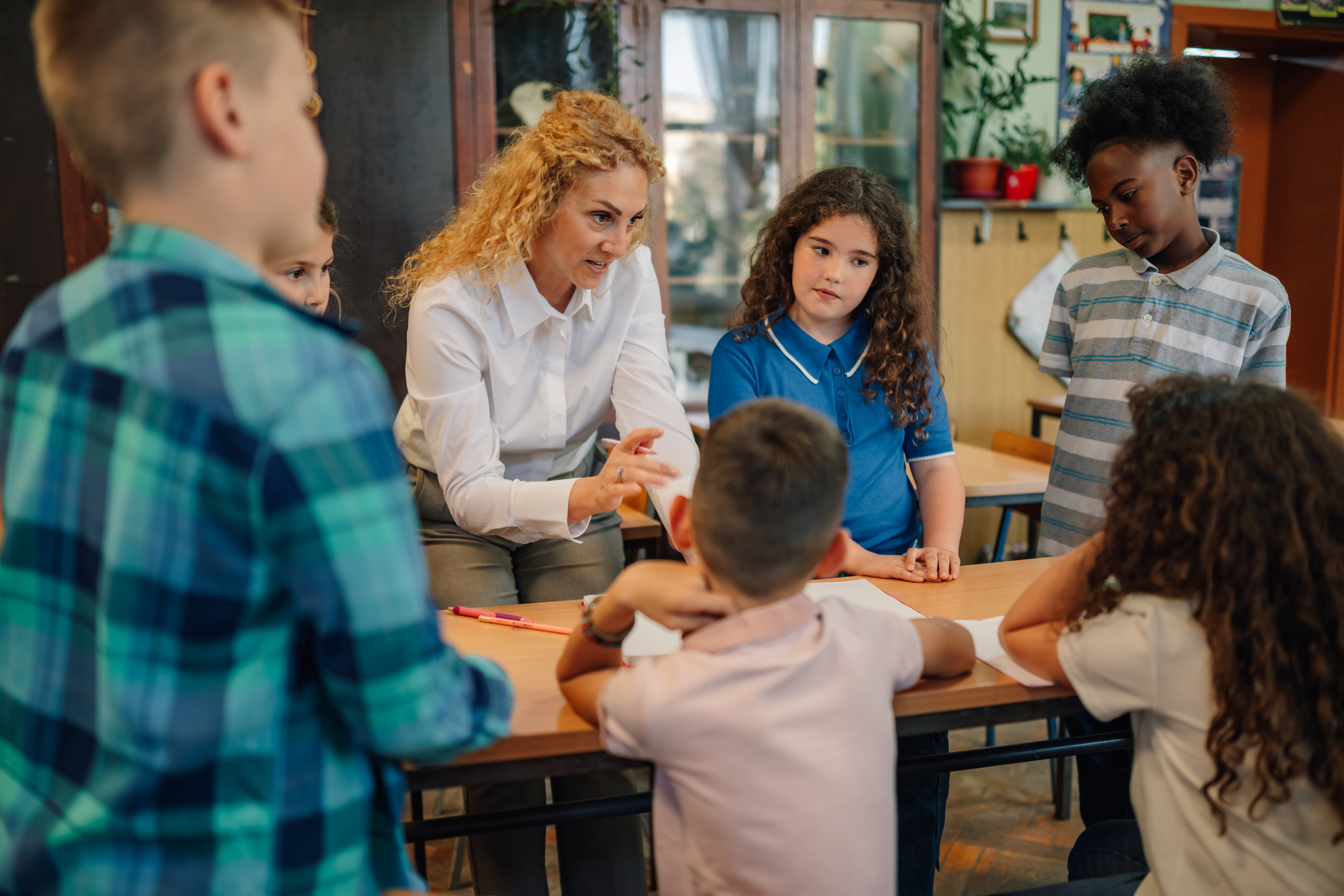
Elementary school teacher explaining lesson to diverse group of students sitting around a table
Empowering Gifted Students: Strategies for Educators to Foster Resilience and Confidence
Gifted students often face challenges that go beyond academics. Their emotional world is a complex puzzle that needs understanding and care. As an educator, you hold the key to unlocking their resilience and confidence. Imagine guiding them through the labyrinth of emotions, transforming anxiety into strength. In this blog, you’ll discover practical educator strategies to offer the emotional support these students desperately need. Ready to empower your gifted students to thrive? Let’s explore these transformative approaches.
Building Resilience in Gifted Students
Building resilience in gifted students is crucial for their emotional and academic success. Resilience allows them to face challenges with strength and adaptability. By providing the right support and strategies, educators can help gifted students navigate their unique emotional landscapes effectively. This section will explore the emotional challenges faced by these students and introduce coping strategies to foster resilience.
Understanding Emotional Challenges
Gifted students often experience intense emotions due to their heightened sensitivity and intelligence. This can lead to feelings of isolation and anxiety.
Gifted students may struggle with perfectionism, fearing failure due to high expectations.
Emotional challenges can manifest as stress, leading to emotional exhaustion.
They may also experience asynchronous development, where emotional maturity does not match intellectual development.
Real-world examples highlight these challenges. For instance, a gifted student might excel academically but feel socially isolated due to advanced interests that peers do not share.
Gifted education must prioritize emotional support. Educators can benefit from resources like Gifted Challenges to understand these dynamics better.
Developing Coping Strategies
Coping strategies are vital for gifted students to manage their emotional challenges. Educators can play a significant role in developing these strategies.
Encourage expression: Allow students to express their feelings openly through journaling or art.
Teach mindfulness: Mindfulness exercises can help students reduce anxiety and improve focus.
Model resilience: Demonstrating how to handle setbacks teaches students how to respond to their own challenges.
Examples from Psychology Perspective suggest that mindfulness practices can significantly lower stress levels in gifted students.
Through these strategies, educators can help students build a toolkit for emotional resilience, enabling them to face challenges with confidence.
Boosting Confidence Through Support
Confidence and resilience go hand in hand. By fostering a supportive environment, educators can help gifted students build confidence and feel more secure in their abilities. This section explores the importance of a growth mindset and the power of celebrating small successes.
Encouraging Growth Mindset
A growth mindset encourages gifted students to view challenges as opportunities for growth rather than threats.
Fixed mindset: Believes intelligence is static.
Growth mindset: Emphasizes learning from failures and embracing challenges.
Educators can nurture a growth mindset by:
Praising effort: Focus on the process rather than the outcome.
Discussing failures: Normalize setbacks as part of learning.
Setting achievable goals: Help students set realistic and incremental goals.
The National Association for Gifted Children highlights the importance of a growth mindset in building confidence among gifted students.
Celebrating Small Wins
Recognizing small achievements boosts confidence and motivation in gifted students.
Positive reinforcement: Encourages continued effort and perseverance.
Sense of accomplishment: Builds self-esteem.
Educators can:
Create a success board: Display achievements to acknowledge effort.
Provide verbal praise: Offer immediate feedback on accomplishments.
Celebrate milestones: Organize small celebrations for reaching goals.
Gifted students thrive when they see their progress being acknowledged. Regular celebrations can significantly enhance their self-confidence and motivation.
Practical Educator Strategies
Educators are pivotal in shaping the environment where gifted students learn and grow. This section provides practical strategies to create safe learning spaces and foster meaningful peer connections.
Creating Safe Learning Environments
A safe learning environment encourages gifted students to express themselves and take risks without fear of judgment.
Psychological safety: Ensures students feel secure to share ideas.
Inclusive atmosphere: Promotes diversity and acceptance.
Steps to create such an environment include:
Establish clear rules: Set guidelines for respectful interactions.
Encourage open dialogue: Allow students to voice opinions without fear.
Provide emotional support: Be approachable and understanding.
According to Kaltman Law, a nurturing environment can significantly impact a gifted student’s emotional development.
Fostering Peer Connections
Peer connections are vital for emotional support and social development in gifted students. Building these relationships can reduce feelings of isolation.
Social skills: Important for forming meaningful friendships.
Peer interactions: Provide opportunities for learning and growth.
To foster peer connections, educators can:
Organize group projects: Encourage collaboration and teamwork.
Create mentorship programs: Pair older students with younger ones.
Facilitate clubs and activities: Offer interest-based groups for shared interactions.
By actively fostering these connections, educators can help gifted students feel more integrated and supported within their school communities.
🔑✨

A certified Heal Your Life® Coach with 20+ years in education and emotional development. Supports gifted teens in navigating anxiety, perfectionism, and identity challenges, while equipping parents with practical tools for lasting transformation. Sessions blend emotional healing, mindset mastery, and strategic empowerment.